Shivraj Singh Chouhan Leads Strategic Push to Safeguard Farmers and Kharif Season
BK Jha
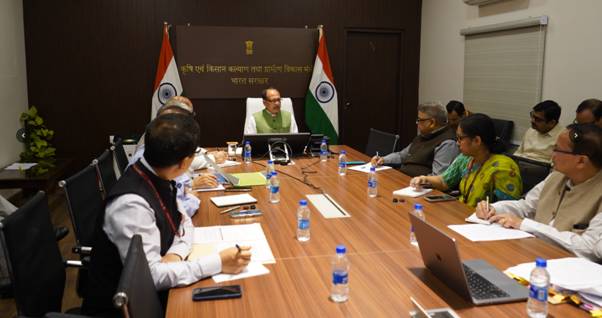
In a significant move aimed at safeguarding India’s agricultural sector during a period of global uncertainty, Union Agriculture and Farmers’ Welfare Minister Shivraj Singh Chouhan has initiated a series of strategic interventions, beginning with the establishment of a Special Cell for round-the-clock monitoring of the agriculture sector. The decision was made during a high-level review meeting chaired by the minister to assess preparedness for the upcoming Kharif season and ensure that Indian farmers remain protected from global supply disruptions, input shortages, and market volatility.
The Special Cell has been created as a central monitoring mechanism that will continuously track the availability and supply of critical agricultural inputs such as fertilizers, seeds, and pesticides across the country. The cell will submit weekly reports directly to the Agriculture Minister, ensuring real-time oversight and faster decision-making in case of shortages or disruptions. The formation of this monitoring mechanism reflects the government’s shift towards proactive governance, where potential crises are anticipated and addressed before they impact farmers and agricultural production.
During the meeting, the Agriculture Minister emphasized that ensuring an uninterrupted and equitable supply of fertilizers remains a top priority for the government. He directed officials to accelerate the implementation of the Farmer ID system, which is expected to bring greater transparency and efficiency to the distribution of fertilizers and agricultural subsidies. The Farmer ID initiative is also expected to help create a comprehensive national database of farmers, enabling better targeting of government schemes, improved policy planning, and reduction in leakages in subsidy distribution. The minister also indicated that he would soon convene a meeting with chief ministers and agriculture ministers of various states to ensure coordinated implementation of the system across the country.
Another major concern discussed during the meeting was the possibility of black marketing and hoarding of fertilizers and seeds in the backdrop of global supply uncertainties. The minister issued clear instructions to take strict action against traders or entities involved in hoarding or black marketing agricultural inputs. State governments will also be encouraged to take stringent enforcement measures to prevent artificial shortages and price manipulation that could negatively impact farmers during the sowing season.
The review meeting also covered the availability of agro-chemicals and essential gases required for seed drying processes, which are critical for seed production and storage. In addition, the minister highlighted the importance of ensuring uninterrupted availability of packaging materials, particularly for milk and other agricultural products. To address these issues, directives were issued to coordinate with the Ministry of Petroleum and other relevant departments so that there are no disruptions in the supply of packaging materials and industrial gases that support the agriculture and dairy supply chain. This indicates that the government is looking at agriculture from a complete value-chain perspective, covering not just farming but also processing, storage, packaging, and distribution.
Overall, the meeting reflected the government’s strategic preparedness for the upcoming Kharif season and its broader commitment to maintaining stability in the agriculture sector despite global challenges. By establishing a Special Monitoring Cell, pushing for faster implementation of Farmer ID, ensuring fertilizer and seed availability, cracking down on hoarding and black marketing, and coordinating inter-ministerial supply chains, the government is attempting to build a more resilient and transparent agricultural ecosystem. The Agriculture Minister reiterated that the government remains fully committed to ensuring that farmers receive all necessary agricultural inputs on time and that every possible step will be taken to protect the interests of farmers and maintain stability in the agricultural sector.