
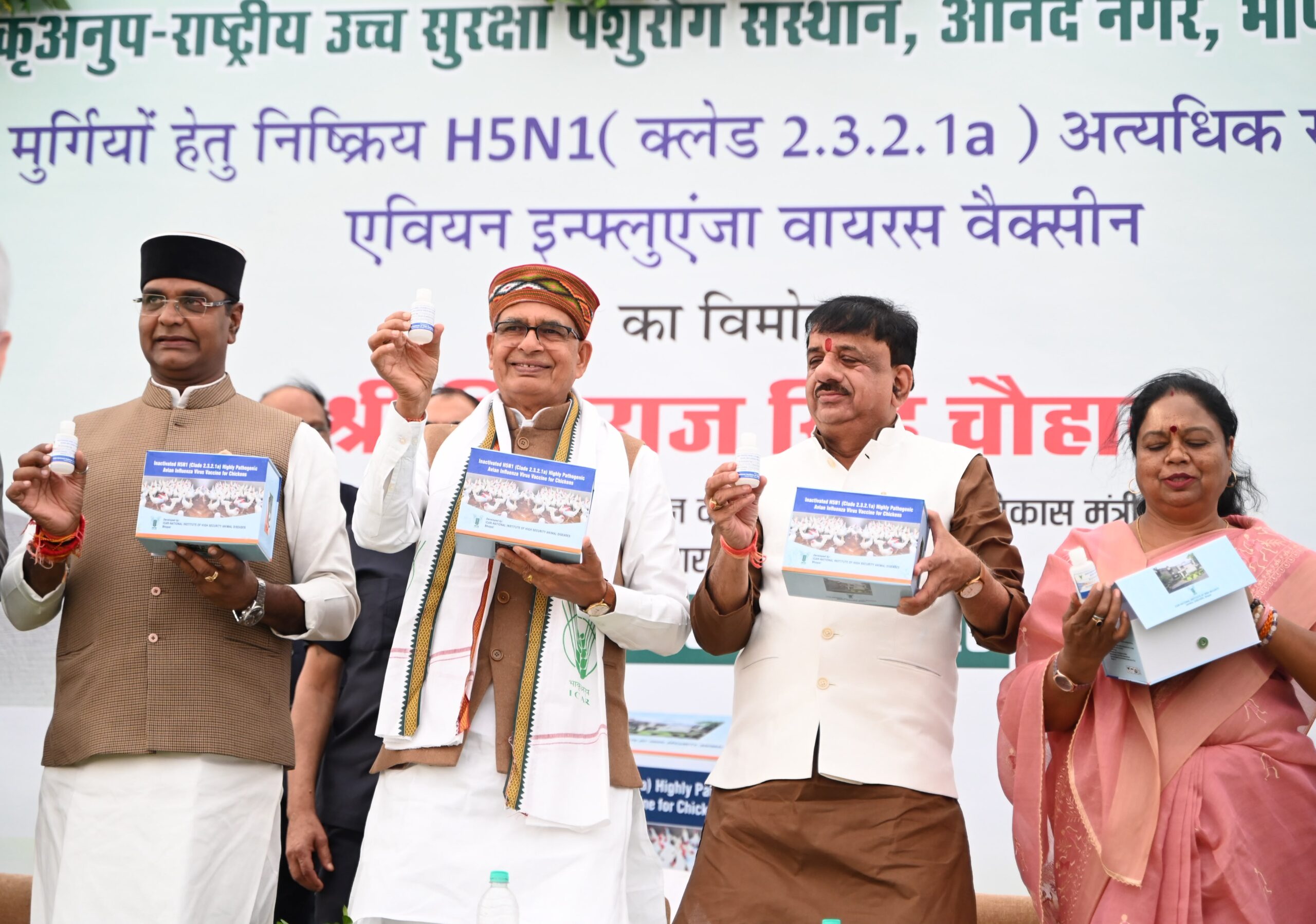
Union Minister for Agriculture and Farmers’ Welfare & Rural Development Shivraj Singh Chouhan Announces Rs 300-Crore State-of-the-Art Animal Disease Research Laboratory in Bhopal
BK JHA
In a major milestone for India’s scientific capabilities and the country’s drive towards self-reliance, Union Minister for Agriculture and Farmers’ Welfare and Rural Development Shivraj Singh Chouhan today dedicated India’s first indigenous chicken vaccine against Avian Influenza (H5N1), commonly known as bird flu, to the nation at a program in Bhopal.
The Union Minister also announced the establishment of a new state-of-the-art laboratory in Bhopal at an estimated cost of Rs 300 crore. Priced at an affordable Rs 1-2 per dose, the vaccine is the world’s first vaccine against this particular variant of bird flu. It is expected to strengthen disease prevention in the poultry sector, protect the livelihoods of millions of poultry farmers and help reduce the enormous economic losses caused by animal diseases.
Chouhan recalled that Indian scientists had earlier surprised the world by developing two indigenous COVID-19 vaccines in just nine months through a task force constituted under the leadership of Prime Minister Narendra Modi. The development of the country’s first indigenous bird flu vaccine is another demonstration of India’s scientific strength and self-reliance, he added.
Highlighting the achievements of the ICAR-National Institute of High Security Animal Diseases (NIHSAD) in Bhopal, Chouhan announced a new state-of-the-art laboratory worth ₹300 crore for the city. He said that the Bhopal-based institute had emerged as a symbol of India’s scientific excellence. The Minister also explained why the vaccine was dedicated to the nation in Bhopal rather than Delhi. Although there had initially been a proposal to launch the vaccine from Delhi, he decided that the occasion should take place in Bhopal, among the scientists who had worked day and night to develop it and in the presence of the people of the city. The achievement belonged to these scientists, and it was important to recognise their contribution at the very place where the vaccine had been developed, he said.
Describing animal husbandry and poultry as vital pillars of the rural economy, Chouhan said that livestock are ‘moving ATMs’ for farmers, providing a regular source of monthly income alongside agriculture.
Animal husbandry contributes 14 per cent to India’s GDP, while the poultry sector accounts for another 1 per cent. He also underlined the substantial economic burden caused by major animal diseases. According to the figures shared by the Minister, Foot and Mouth Disease causes average annual losses of Rs 22,000 crore, Lumpy Skin Disease results in losses of Rs 20,000 crore, Brucellosis accounts for Rs 9,212 crore and Peste des Petits Ruminants, a disease affecting sheep and goats, causes losses of Rs 4,683 crore. Together, these diseases have caused losses of approximately Rs 56,000 crore to the country and its farmers. Indigenous vaccines are playing a crucial role in protecting livestock, safeguarding farmers’ incomes and reducing this economic burden, he said.
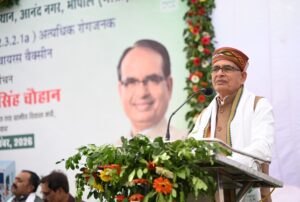
Chouhan also recalled that India’s first bird flu outbreak was reported in 2006 in Navapur, Maharashtra, resulting in the death of 10 lakh chickens. To contain the infection, lakhs of additional birds had to be culled and buried. Subsequently, around nine lakh chickens died in 2021, while another two-lakh died this year. Since 2006, India has witnessed more than 500 bird flu outbreaks, causing significant damage to the poultry industry. The disease also poses a risk of transmission to mammals and humans, making effective prevention and control measures particularly important. The new indigenous vaccine has been priced at just ₹1-2 per dose to ensure that even small poultry farmers can afford it. Its low cost will make preventive vaccination more accessible and help protect the livelihoods of poultry farmers across the country, the Minister said.
Chouhan highlighted the government’s sustained efforts to control major animal diseases through vaccination. He said the Prime Minister had launched the National Animal Disease Control Program from Mathura to strengthen disease prevention and protect livestock. Under the program, 147 crore 16 lakh free vaccine doses have so far been administered against Foot and Mouth Disease. Brucellosis has also been brought under control, he said. Recalling the outbreak of Lumpy Skin Disease in 2022, Shri Chouhan said that 32 lakh 80 thousand animals were infected and 1 lakh 86 thousand animals lost their lives. Scientists at Hisar and Izatnagar subsequently developed the ‘Lumpi-ProVacInd’ vaccine to combat the disease. He also commended the achievements of ICAR-NIHSAD, Bhopal, which has previously developed indigenous vaccines for Gumboro disease, Brucella abortus S-19 Delta, Classical Swine Fever and African Swine Fever. The latest H5N1 vaccine adds another significant achievement to the institute’s contribution to India’s animal health research.
Paying tribute to the scientists behind the vaccine, Shri Chouhan described them as the real heroes of this achievement and praised their extraordinary commitment and dedication. The research team comprised Dr. S. Nagarajan, Dr. Manoj Kumar, Dr. C. Tosh, Dr. H. V. Murugkar, Dr. Aniket Sanyal, Dr. Senthil Kumar D., Dr. Naveen Kumar and Dr. Yogisharadhya R. Chouhan saluted their commitment, describing their dedication as being akin to the discipline and sacrifice of soldiers serving the nation. He said that the achievement reflected the extraordinary perseverance of India’s scientific community.