BK JHA
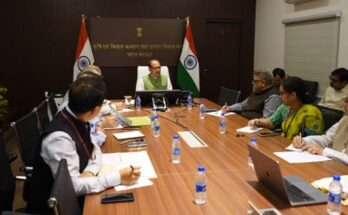
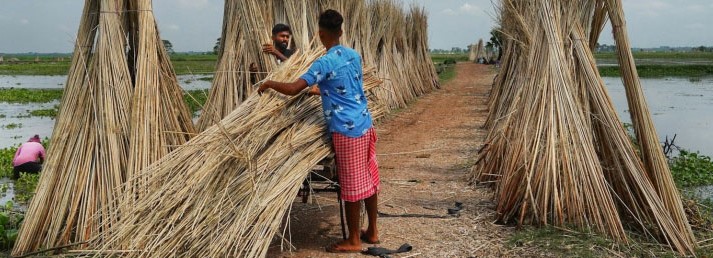
In a significant policy move aimed at strengthening farmer incomes and supporting India’s natural fibre economy, the Cabinet Committee on Economic Affairs, chaired by Prime Minister Narendra Modi, has approved the Minimum Support Price (MSP) for raw jute for the 2026–27 marketing season.
The MSP for raw jute (TD-3 grade) has been fixed at ₹5,925 per quintal, ensuring an assured return of 61.8 per cent over the all-India weighted average cost of production. The decision aligns with the government’s long-standing commitment, announced in the Union Budget 2018–19, to fix MSPs at least 1.5 times the cost of production, providing income security to farmers.
The newly announced MSP marks an increase of ₹275 per quintal over the previous 2025–26 season, reinforcing the Centre’s focus on protecting jute growers against market volatility. Since 2014–15, the MSP for raw jute has seen a sharp rise—from ₹2,400 per quintal to ₹5,925 per quintal in 2026–27, an increase of ₹3,525 per quintal, or nearly 2.5 times over the past decade.
Reflecting the scale of government support, payments made to jute-growing farmers through MSP operations during 2014–15 to 2025–26 stood at ₹1,342 crore, compared with ₹441 crore during the period 2004–05 to 2013–14.
The Jute Corporation of India (JCI) will continue to function as the Central Government’s nodal agency for implementing price support operations. Any losses incurred during procurement will be fully reimbursed by the Central Government, ensuring uninterrupted MSP implementation.
The decision is expected to boost confidence among jute farmers, particularly in eastern states, while also strengthening India’s eco-friendly fibre ecosystem at a time when global demand for sustainable alternatives to plastics is steadily rising.