
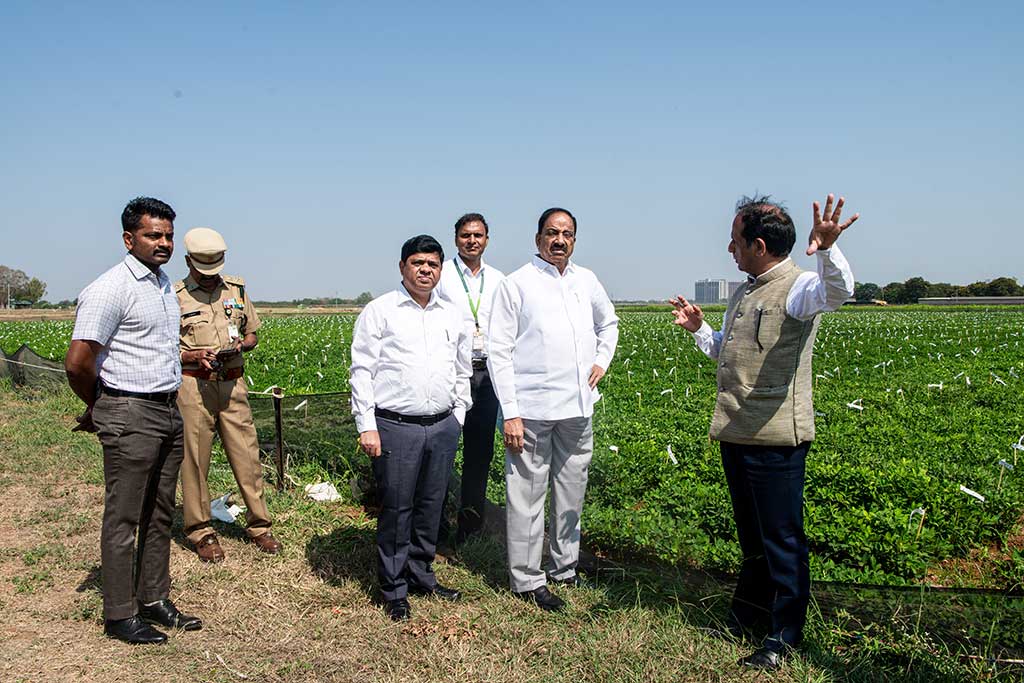
Healthy soils are critical to sustaining crop productivity, improving input efficiency, and securing farmer livelihoods while also serving as a key pillar of the One Health approach, which links environmental, animal, and human well-being. To address this, The International Crops Research Institute for the Semi-Arid Tropics (ICRISAT), in collaboration with the Government of Telangana, commenced a two-day training on soil health management on April 06-08, 2026, at its headquarters in Patancheru, Hyderabad.
Aligned with the state’s Telangana Rising vision, the initiative focuses on equipping over 120 farmers and frontline stakeholders from Telangana’s Kodangal with practical tools, knowledge, and advisory support to improve soil health, optimize input use, and promote crop diversification.
The inaugural session was attended by Thummala Nageswara Rao, Minister for Agriculture, Marketing, Co-operation, Handlooms & Textiles, Government of Telangana; D. Raji Reddy, Vice Chancellor, Konda Laxman Telangana State Horticultural University; Balram Marathi, Director of Research, Professor Jayashankar Telangana Agricultural University; Yasmeen Basha, Director, Department of Horticulture, Government of Telangana; and K Surendra Mohan, Agricultural Production Commissioner and Secretary, Agriculture & Co-operation Department, Government of Telangana.
In his opening remarks, Himanshu Pathak, Director General, ICRISAT, emphasized that advancing soil health depends on capacity building, partnerships, policy alignment, and effective knowledge transfer.
“Soil health management must move from being a recommendation to becoming a practice at scale. As a critical pillar of the One Health approach, it underpins crop productivity, environmental health, and human well-being,” he added.
“Achieving these goals requires strong alignment between science, policy, and field-level implementation, along with crop diversification through the adoption of millets, pulses, and oilseeds. At ICRISAT, we are working to bridge these elements so that farmers can adopt practical, efficient, and sustainable solutions within existing support systems,” Pathak said.
Telangana Agriculture Minister Thummala Nageswara Rao said, “The Government of Telangana values its strong partnership with ICRISAT and trusts its scientific capabilities to support our agricultural priorities. We encourage farmers and field-level stakeholders to adopt the learnings from this program, use improved tools, and benefit from government initiatives.”
“Reducing dependency on chemical fertilizers and promoting sustainable soil management practices are essential for improving productivity, lowering costs, and ensuring long-term agricultural sustainability under the Telangana Rising vision,” added Rao.
Yasmeen Basha and K Surendra Mohan emphasized the need to align soil health efforts with crop choices and scale capacity-building initiatives across the state. They highlighted that farmers should move beyond traditional rice-based systems to fully realize the benefits of improved soil management. They also noted that this training marks the first phase of a broader initiative, which will be extended to farmers across the state to ensure wider impact.
The program integrated classroom sessions with hands-on laboratory and field training. Participants learned how to test and understand soil, including its chemistry, physics, and microbiology, and also got hands-on experience with things like composting and using bioinputs.
It also focused on using Soil Health Cards to manage nutrients, give fertilizer advice, and provide crop guidance, helping farmers make better decisions in the field while encouraging crop variety, smart use of resources, and lasting soil health.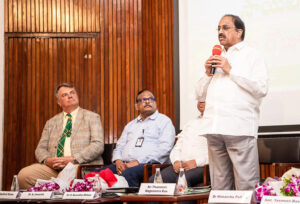
The initiative is an important move to enhance soil health in Telangana by giving farmers scientific knowledge and practical solutions, which will help them grow crops better, increase productivity, and support sustainable ways of living.
ICRISAT is a pioneering international organization committed to developing and improving dryland farming and agri-food systems to address the challenges of hunger, malnutrition, poverty, and environmental degradation affecting the 2.1 billion people residing in the drylands of Asia, Sub-Saharan Africa, and beyond.