
The ongoing US-Israel-Iran war has exposed a critical vulnerability in global agriculture supply chains, with significant disruptions of urea, the world’s most widely used nitrogen fertiliser, driving sharp price increases and raising concerns about global food security. For a country like India, which relies significantly on imported fertilisers, this situation poses immediate challenges for smallholder farmers through rising input costs and potential pressure on crop productivity and profitability.
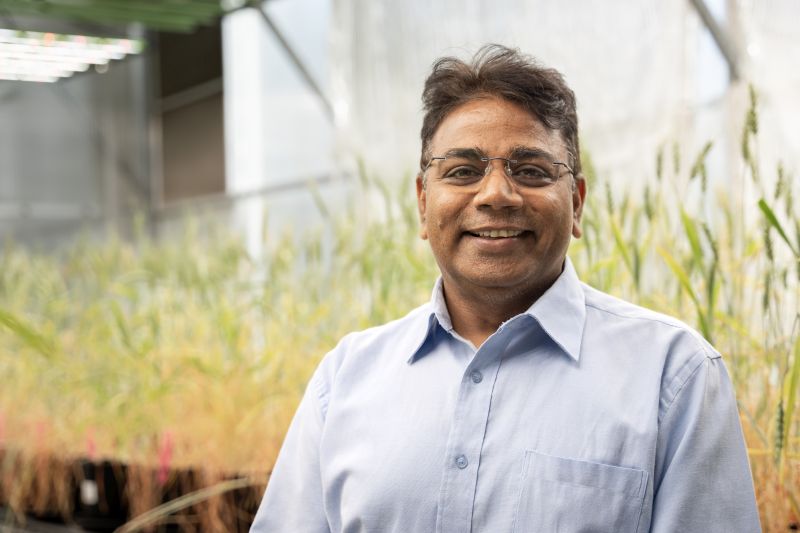
In this context, Mohd Mustaquim interviewed Prof. Rajeev K. Varshney FRS FAA, an internationally recognised agricultural scientist who serves as Director, Centre for Crop and Food Innovation, and International Chair – Agriculture & Food Security at Murdoch University’s Food Futures Institute. A global leader in genomics-assisted breeding, Prof Varshney is calling for science, policy, and practical interventions that can help farmers navigate this emerging crisis and build more resilient agricultural systems.
Excerpts:
The ongoing Middle East conflict has disrupted fertiliser supply chains globally. How serious is this challenge for countries like India and Australia?
This is a highly significant, structural challenge. At present, most of the discussions relating to the Strait of Hormuz are focused on oil supply from the Middle East; however, we should also be aware that approximately 45 per cent of the world’s fertiliser supply is exported through the Middle East, with nearly one-third of the globe’s total supply physically shipped through the Strait. Australia is particularly vulnerable, as the Persian Gulf typically supplies around 40 per cent of its urea (nitrogen) needs. Similarly, India relies on the Middle East for over 40 per cent of its urea and phosphate fertilisers. Approximately 75 per cent of India’s urea imports, and over 60 per cent of DAP (Diammonium Phosphate) imports, transit through the Strait of Hormuz. The disruption of fertiliser supply, particularly nitrogen-based inputs, directly impacts crop productivity, input costs, and ultimately food prices. What makes this situation concerning is that it affects both availability and affordability, which will impact fertiliser application rates and compromise yields. So this supply chain disruption highlights a real need to redesign agricultural systems for reduced external input dependency.
Given the current fertiliser price volatility due to global disruptions, should smallholder farmers in India be worried or panic? What immediate steps should they take?
There is no need for panic, but there is certainly a need for informed and timely action. The current situation is challenging, but it can be managed effectively with better planning and efficient use of available resources. In fact, many farmers can reduce fertiliser costs without compromising yields if they adopt a few practical measures.
First and foremost, soil testing should be the top priority. In India, farmers should get their soils analysed, either through local Krishi Vigyan Kendras or by using portable soil health kits. It is quite possible that soils already contain sufficient residual phosphorus and potash from previous seasons, and farmers can safely reduce or skip these inputs for one season.
You may also like to read: Fisheries and aquaculture sectors key to India’s nutrition security
Farmers can also consider switching to Nano Urea, which is being promoted in India. It is more efficient, easier to transport, and one small bottle can replace a conventional bag of urea, making it a practical short-term solution that is less exposed to global supply disruptions.
Another important step is improving the precision application of fertilisers. Instead of broadcasting fertilisers across the entire field, applying them closer to the root zone or using fertigation can improve efficiency and reduce wastage by 30–40 per cent.
Finally, where possible, farmers may consider including legume crops in their cropping systems. These crops naturally enrich soil nitrogen and reduce fertiliser requirements for subsequent crops.
The key message is that optimisation, not higher input use, is the way forward. With proper soil-based management, farmers can often reduce fertiliser use by 20–25 per cent without affecting productivity.
From a scientific perspective, what key interventions should be prioritised to reduce dependence on fertilisers in the long term?
We need a multi-pronged scientific strategy. First, improving Nitrogen Use Efficiency (NUE) in crops is critical for developing varieties that produce higher yields with lower nitrogen inputs.
Second, we must better harness biological nitrogen fixation by strengthening the role of pulses in cropping systems. Pulses such as chickpea, lentil, fababean, pigeonpea, among others, not only provide nutritional security but also naturally enrich soil nitrogen, reducing the need for synthetic fertilisers in subsequent crops. Designing pulse-based crop rotations and intercropping systems will be an important pathway, and we are currently working on this aspect with our research partners, with a specific focus on Western Australia’s cereal-intensive cropping system.
Third, advances in genomics-assisted breeding and AI-driven crop design can help identify and deploy genes controlling efficient nutrient uptake, transport, and remobilisation. Finally, integrating soil microbiome research can unlock natural nutrient cycling processes that are currently underutilised.
You are an expert in genomics and modern breeding. What are your perspectives on the use of genomics and modern breeding in addressing this fertiliser crisis?
We should address both crop genetics and system-level efficiency. As an example of using genomics in the context of improving Nitrogen Use Efficiency (NUE) in crops, we undertake the discovery of traits that enhance nitrogen uptake, assimilation, and remobilisation of crops without sacrificing yield or grain quality. The next step is to then integrate physiology with genomics, so we can better understand how plants allocate nitrogen during critical stages, such as grain filling. Once these traits are determined and understood, we can move on to genomics-assisted breeding and develop new crop varieties that require less nitrogen inputs whilst retaining, or even increasing, yield and grain content.
You may also like to read: More intelligent AI algorithms for the agriculture sector coming soon
On that note, advances in genomics, pangenomics, and AI-driven predictive breeding are opening new opportunities for crop improvement. Through pangenomics, GWAS, and AI-based genomic prediction, we can identify superior haplotypes associated with improved nitrogen uptake and utilisation. By combining genomics-assisted breeding combined with speed breeding, we can rapidly integrate superior haplotypes into elite cultivars, and AI can further help design new crop ideotypes that are optimised for both productivity and resource-use efficiency under varying environments.
In addition, there is a strong need to integrate soil microbiome research. Beneficial microbes play a crucial role in nutrient cycling, nitrogen fixation, and improving nutrient availability to plants. Leveraging microbial consortia and bio-fertilisers can significantly complement genetic gains.
Importantly, these interventions should be embedded within integrated agronomic practices, including precision nutrient management and digital decision-support tools to ensure that genetic potential is fully realised in farmers’ fields. Together, this integrated approach can substantially reduce fertiliser dependency while sustaining productivity and environmental health.
Ultimately, we are eager for a paradigm shift from input-intensive agriculture to knowledge-intensive agriculture.

Are you currently leading any research initiatives in Australia that address nitrogen efficiency in crops?
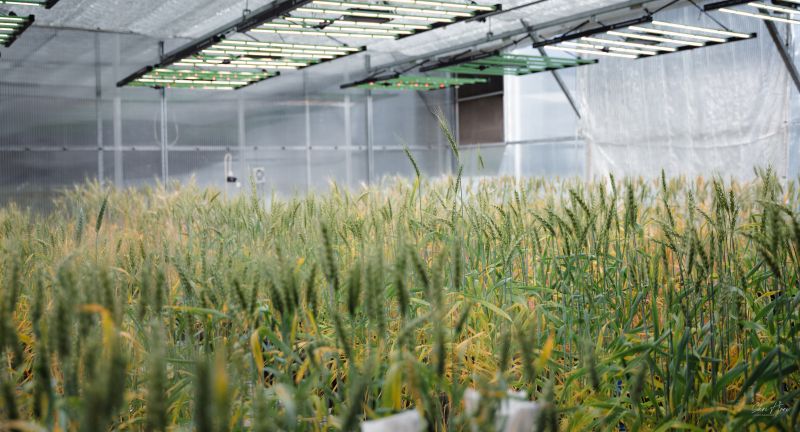
Yes, we are. In fact, the Centre for Crop and Food Innovation (Food Futures Institute) is currently leading a major research initiative on Nitrogen Use Efficiency in wheat with the generous support of the Grains Research & Development Corporation (GRDC) and WA Agricultural Research Collaboration (WAARC). We are collaborating with The University of Western Australia, WA Department of Primary Industries and Regional Development, Australian Grain Technologies (AGT), and Curtin University. This programme integrates physiology, genomics, and AI to understand how wheat plants allocate and recycle nitrogen during growth. A key project aim is to identify genetic and physiological traits that enable wheat to maintain yield and grain protein with reduced nitrogen inputs.
We just had our Annual Meeting of the project at UWA last week, where the project partners reviewed the progress and planned future work. And given the current geopolitical climate, we have all agreed that we need to accelerate our research activities so that we can address nitrogen efficiency in wheat and ensure that we are able to mitigate similar supply chain shocks in the future. While the project’s immediate focus is on Australian wheat, this work has global relevance and can be adapted to diverse agro-ecologies, including India.
How can this research be leveraged for Indian agriculture, given its unique challenges?
Our work is very relevant globally, and India stands to benefit immensely. The approaches we are developing, such as identifying key haplotypes associated with NUE, integrating genomics into breeding pipelines, and using AI for trait prediction, can be directly translated into Indian crop improvement programmes. Moreover, India has strong legume-based systems, which provide an excellent opportunity to enhance biological nitrogen fixation and reduce fertiliser dependence.
You may also like to read: Need to make agricultural research demand-driven with private sector engagement
Collaborative efforts between Australian and Indian institutions can accelerate the development and deployment of climate-resilient, nutrient-efficient varieties tailored to Indian conditions. Based on my experience, I believe that our work will be very helpful to the Indian Council of Agricultural Research (ICAR) institutes and state agricultural universities, and we are very happy to lend any aid we can to address this important challenge.
Beyond crop genetics, what broader changes are needed in agricultural research and policy?
While crop genetics and breeding are powerful drivers, addressing current challenges requires a systems-level transformation of agriculture. We need to move beyond a single-discipline approach and adopt integrated crop–soil–microbiome frameworks, where plant genetics, soil health, and microbial interactions are considered together to enhance productivity and resilience.
From a research perspective, greater emphasis should be placed on resource-use efficiency, particularly for nutrients like nitrogen and water. This includes linking physiology, agronomy, and digital tools to develop practical, field-ready solutions. Investments in data-driven agriculture, including AI and decision-support systems, can also help farmers optimise input use in real time.
On the policy side, there is a need to shift incentives from input-intensive agriculture to efficiency-driven systems. This means promoting soil testing, balanced fertilisation, crop diversification, especially the inclusion of legumes, and wider adoption of improved, nutrient-efficient varieties. I would like to see it taken further by strengthening extension systems and last-mile delivery to ensure that scientific innovations reach farmers effectively.
Importantly, we must foster stronger public–private–farmer partnerships, as we have it here in Australia, to ensure alignment between research priorities, industry needs, and farmer realities. In the face of global uncertainties, building resilient, low-input, and climate-smart agricultural systems should be a central priority for both research and policy.
Finally, what is your long-term vision for sustainable agriculture in the face of such global disruptions?
As mentioned earlier, my vision is to transition towards climate-smart, resource-efficient agriculture that is less dependent on external inputs and more resilient to the global shocks that we have seen over the past decade. This requires a fundamental shift from input-intensive systems to knowledge- and innovation-driven agriculture. By integrating genomics, AI, advanced phenotyping, and sustainable agronomy, we can design crop varieties that maintain high productivity while using fewer resources, such as nitrogen, water, and energy.
Here in Australia, we are already advancing this vision through collaborative efforts supported by GRDC and WAARC, working closely with universities, government agencies, and industry partners. Our focus is on improving nitrogen use efficiency in wheat and contributing to developing next-generation varieties that can deliver stable yields and grain quality with reduced fertiliser inputs. This is directly aimed at enhancing profitability for growers, particularly in environments like Western Australia, where input costs and climatic variability pose significant challenges.
At the same time, we are promoting diversified and resilient cropping systems, including the integration of pulse crops like chickpea, lentil, fababean and pea, along with improving soil health and harnessing microbiome-based solutions. A key pillar of this vision is increased investment in translational agricultural R&D, ensuring that scientific discoveries move rapidly from lab to field.
Ultimately, the goal is to build agricultural systems that are not only productive but also economically viable for farmers, environmentally sustainable, and resilient to geopolitical and climate uncertainties. The work we are doing in Australia provides a strong model that can be adapted globally, including for countries like India, to ensure long-term food and nutrition security.