ICRISAT and partners deliver high-yielding, premium-quality varieties for Odisha, Gujarat, Rajasthan and the Northeastern States.
In a significant breakthrough for India’s edible oil economy, the All India Coordinated Research Project on Groundnut (AICRP-G) under the Indian Council of Agricultural Research has identified two new high-oleic groundnut varieties for national release, a development expected to enhance farmers’ incomes, improve edible oil quality and support the country’s drive towards self-reliance in edible oils.
The two varieties—ICGV 201214 and ICGV 181030—were identified by the Variety Identification Committee (VIC) during the AICRP-G Annual Group Meeting held in Pune from April 21 to 23, 2026. Developed jointly by the International Crops Research Institute for the Semi-Arid Tropics and its research partners, the varieties combine higher productivity with superior oil quality, opening new premium market opportunities for Indian groundnut growers.
The breakthrough assumes greater significance as India continues to rely heavily on edible oil imports despite being one of the world’s largest producers of oilseeds. Experts believe high-value, premium-quality varieties could significantly improve the competitiveness of domestic groundnut cultivation while creating additional value across the edible oil supply chain.
First High-Oleic Variety for Odisha and Northeastern States
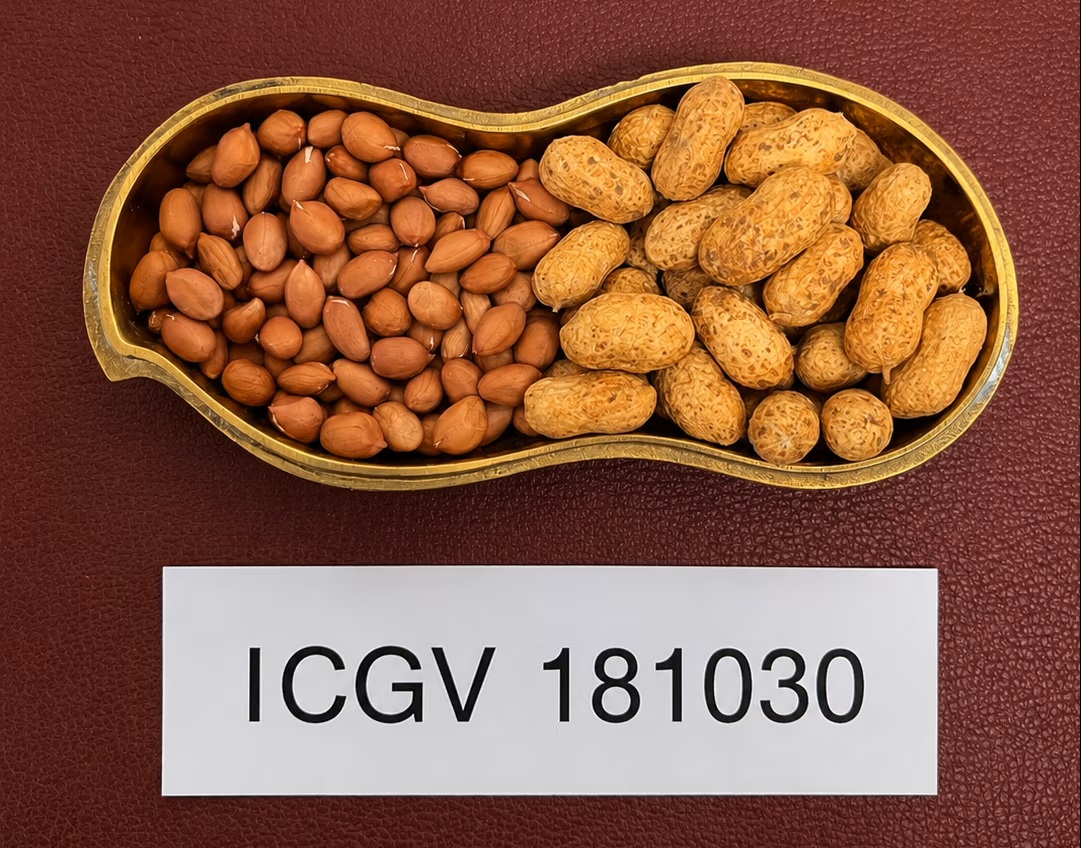
ICGV 181030 (ICDh 181030), jointly developed by ICRISAT and the University of Agricultural Sciences, Dharwad, has become the first high-oleic groundnut variety recommended for cultivation in Odisha and India’s Northeastern States.
The medium-duration Spanish bunch variety has been recommended for Kharif cultivation in Zone II comprising Gujarat, Rajasthan and Maharashtra, and Zone IV covering Jharkhand, Odisha, West Bengal and the Northeastern States.
“This variety contains approximately 78 per cent oleic acid and delivered a seven per cent increase in pod yield over three years of testing compared with the best zonal check, Girnar 3, in Zone IV, while recording a 12 per cent yield advantage over TG 37A in Zone II,” said Janila Pasupuleti, Principal Scientist – Groundnut Breeding, ICRISAT.
Higher Oil Content, Better Market Returns
The second variety, ICGV 201214 (ICGG 107), was jointly developed by ICRISAT and the Junagadh Agricultural University.
Recommended for Gujarat and Rajasthan, the variety contains 81 per cent oleic acid, 53 per cent oil and 27 per cent protein. It also produces bold kernels preferred by processors and consumers.
Field evaluations over three consecutive years showed the variety consistently outperformed existing checks in oil content while registering a 19 per cent improvement in kernel yield over the widely cultivated JL 501.
High-oleic groundnuts contain substantially higher levels of oleic acid than conventional varieties, producing oil with longer shelf life, greater oxidative stability and enhanced nutritional quality. These characteristics are increasingly valued by food processors, exporters and health-conscious consumers, enabling farmers to access premium markets.
Describing the development as a milestone for crop improvement, Raman Babu, Global Research Program Director – Accelerated Crop Improvement (ACI), ICRISAT said, “The future of crop improvement lies in developing differentiated products that benefit farmers, consumers and industry alike. These high-oleic groundnut varieties demonstrate how advanced breeding, combined with strong partnerships, can simultaneously enhance farmers’ income, improve nutritional quality and contribute to India’s edible oil self-reliance.”
Agricultural scientists believe the release of these varieties marks an important step towards increasing farm profitability, improving domestic edible oil production and accelerating innovation in India’s oilseed breeding programme.