Scientists have demonstrated a new approach through pangenome breeding that could help overcome one of agriculture’s biggest challenges: developing varieties that are both highly productive and capable of withstanding harsh growing conditions…
Researchers from the Centre for Crop and Food Innovation (CCFI), as part of an international team led by the Chinese Academy of Agricultural Sciences, have shown that pangenome-guided breeding can bring together two traits that have traditionally been difficult to combine—stress tolerance and higher yield.
The landmark proof-of-concept study, published in Cell, involved 22 research institutions across 10 countries. It used Tartary buckwheat, a hardy grain native to the Himalayas, to demonstrate how genetic resources from wild relatives and traditional varieties can be used to develop better-performing crops.
The study found that crop domestication and conventional breeding may have eliminated some genes that were useful for survival under extreme conditions. These genes, however, can still exist in wild relatives and local landraces.
You may also like to read: New Groundnut Varieties to Boost Farmer Incomes and Strengthen India’s Edible Oil Economy
A pangenome essentially provides a much broader genetic picture of a crop than a single reference genome. Instead of comparing every plant with one standard genetic blueprint, researchers can examine the genetic diversity present across many varieties, including wild and traditional populations.
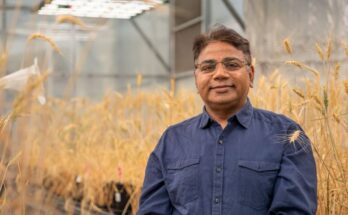
CCFI Director and co-corresponding author Professor Rajeev Varshney FRS FAA explained the concept in simple terms: “Most modern breeding compares a crop’s genome against a single reference, which is like judging a language by a single dictionary. A pangenome captures the whole vocabulary, including the words a crop lost along the way. And that’s where a lot of the useful genetics for resilience is hiding.”
“Resilience and yield are usually a trade-off, meaning that when you increase one, you lose the other. What the pangenome lets us do is identify the specific DNA segments underlying each trait and deliberately stack them. That’s a template other breeding programmes can follow,” he added.
Finding Lost Genetic Advantages
Tartary buckwheat was selected because its wild relatives are naturally adapted to difficult Himalayan environments, including intense ultraviolet radiation and cold temperatures. Such characteristics could be valuable for developing crops suited to increasingly challenging growing conditions.
The researchers studied genetic material from 994 buckwheat accessions collected from 15 countries and developed a pangenome using 16 representative genomes.
In simple terms, this allowed them to identify genetic differences that would have been difficult to detect by looking only at one reference genome.
The study identified a gene called FtRNH, found in high-altitude wild plants but absent in cultivated varieties. The gene helps plants repair DNA damage caused by ultraviolet-B radiation, giving the plants a greater ability to cope with high-altitude stress.
Researchers also identified another genetic region, called FtPLATZ, associated with seed size. Extra copies of genes in this region, along with a small change in the DNA controlling the gene, were linked to larger seeds.
The team then combined these genetic advantages through conventional crossing and marker-assisted selection—a breeding technique that allows scientists to identify plants carrying desired genes at an early stage.
The resulting candidate breeding line carried both the stress-tolerance gene from wild buckwheat and the genetic variants associated with larger seeds. In high-altitude field trials, the new line showed stronger growth and significantly higher yields than the standard variety, while also producing larger seeds.
Potential Beyond Buckwheat
The significance of the research extends beyond Tartary buckwheat. Scientists believe the approach could be applied to major crops by tapping into the genetic diversity preserved in wild relatives and traditional farmer-developed varieties.
Murdoch University Deputy Vice Chancellor Research and Innovation Professor Peter Eastwood said, “This is a landmark study that demonstrates how data-led breeding strategies can be applied to major staple crop breeding programs to deliver varieties tailored to specific growing conditions. What’s most important is the applicability of this approach to crops bred in regions where food-security pressure is greatest, and I look forward to seeing this strategy applied in other CCFI-led projects in Australia and abroad.”
“CCFI researchers continue to lead the way for genomics-led research that improves grower profitability and food security. But more than that, it’s fantastic to see the team go beyond the delivery of genomics resources and establish a replicable, evidence-based breeding strategy that breeders can adopt,” added Professor Peter Davies, Pro-Vice Chancellor, Murdoch University.
With climate change increasing pressure on agricultural systems, the ability to combine the resilience of wild crops with the productivity demanded from modern agriculture could become increasingly important.
The researchers argue that because virtually all major crops have wild relatives and traditional varieties carrying untapped genetic diversity, pangenome-guided breeding could provide a new pathway to develop crops that are simultaneously more productive, resilient and better adapted to local environments.